Tag: surveillance

  • NYPD: Internet Attribution Management Infrastructure

    NYPD · NYC.gov

    The NYPD disclosure from February 4th:

    The NYPD uses internet attribution management infrastructure, including Ntrepid, to manage digital footprints and allow its personnel to safely, securely, and covertly conduct investigations and detect possible criminal activity on the internet.

    . . .

    The information that is ultimately accessible to NYPD personnel utilizing this equipment is limited to publicly available information or the information that is viewable as a result of the privacy settings, privacy practices, and access limitations of an internet environment (e.g., chatrooms, social media profiles, messaging applications)
  • Mamdani faces first showdown with NYPD – will he risk alienating police?

    Eric Berger · The Guardian

    On 4 February, the NYPD disclosed that it used “internet attribution management infrastructure” from the technology company Ntrepid to “allow its personnel to safely, securely and covertly conduct investigations and detect possible criminal activity on the internet”. In other words, to create the sort of “sock puppet” online identities that Mamdani had once sought to prevent.

    . . .

    Owen, of Stop, also argues that the police could use such a tool to target Black and Latino residents. He pointed to the NYPD’s previous disclosure that if someone “makes a comment such as ‘Happy Birthday’ on the Facebook page of a gang member”, they could be considered a “known associate” and added to its criminal database, according to an inspector general report.

  • EFFecting Change: Get the Flock Out of Our City

    EFF · EFFecting Change Livestream Series

    Join our panel to explore what’s happening as Flock contracts face growing resistance across the U.S. We’ll break down the legal implications of the data these systems collect, examine campaigns that have successfully stopped Flock deployments, and discuss the real-world consequences for people’s privacy and freedom.

    Livestream
    February 19, 2026 – 12:00pm to 1:00pm PST

  • New ZeroDayRAT Mobile Spyware Enables Real-Time Surveillance and Data Theft

    Ravie Lakshmanan · The Hacker News

    advertised on Telegram as a way to grab sensitive data and facilitate real-time surveillance on Android and iOS devices

    The fact that it’s being marketed on Telegram is hinting at a trend toward spyware commodification. No bueno.

  • With Ring, American Consumers Built a Surveillance Dragnet

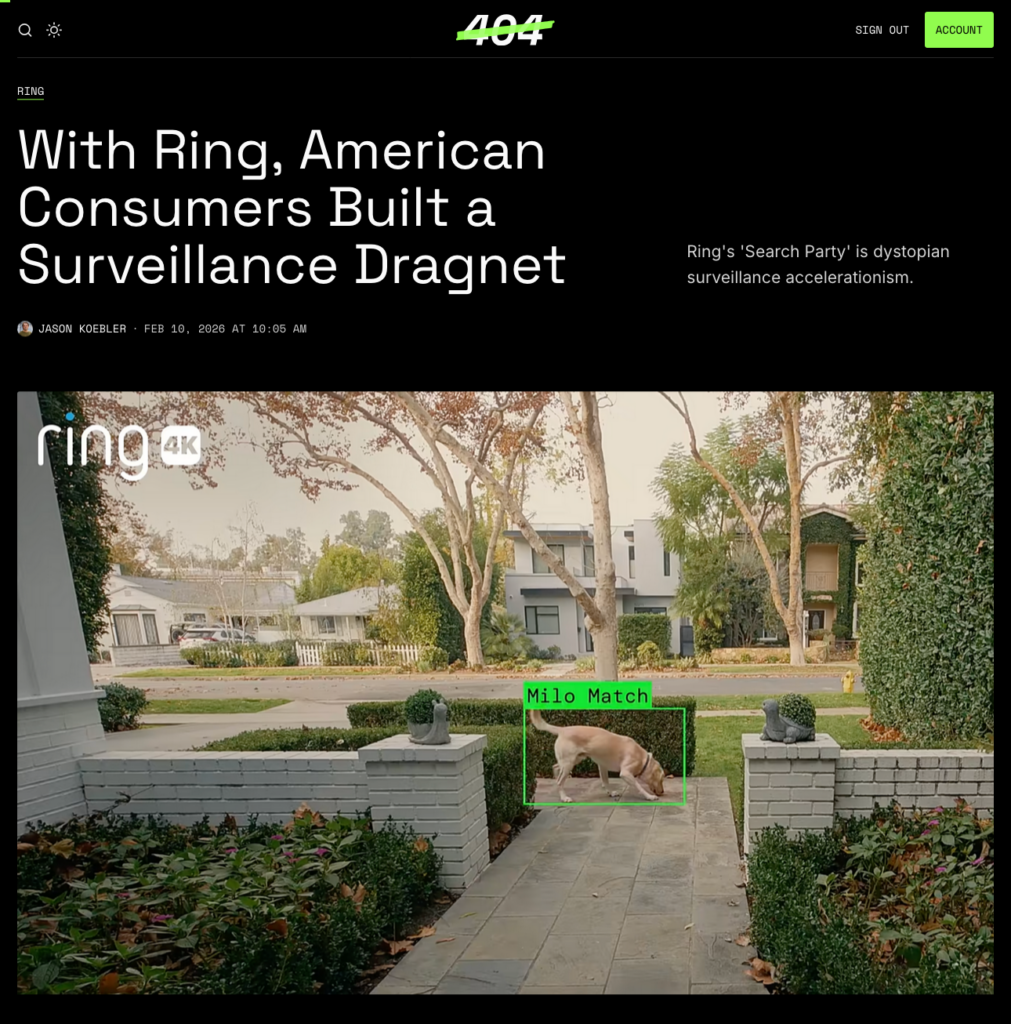
    With Ring, American Consumers Built a Surveillance Dragnet

    Jason Koebler · 404 Media

    Ring had always, explicitly been intended to assist law enforcement. In a series of investigations we did back at VICE (mostly written by Caroline Haskins, who is still covering surveillance at WIRED), we uncovered thousands of pages of documents, emails, and chats via public records requests and leaks that highlighted Ring’s surveillance ambitions. The company threw parties for police, employees wore “FUCK CRIME” shirts to internal parties, and helped police facilitate the retrieval of footage from its customers’ cameras if they initially refused to cooperate.

    . . .

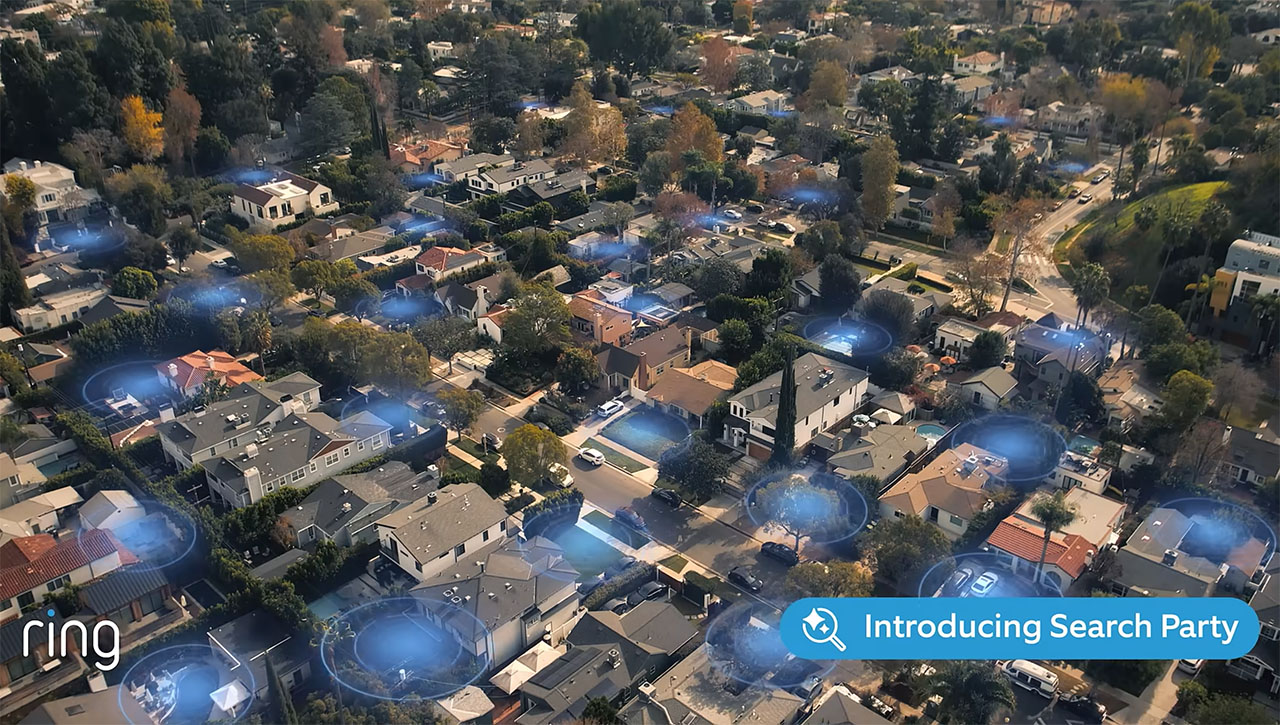
    With Ring’s recent partnership with Flock, which will further facilitate the sharing of video footage with police, and its new Search Party feature, the message is clear: Ring is still, again, and always will be in the business of leveraging its network of luxury surveillance consumers as a law enforcement tool.

    404Media.co screenshot. Article title, "With Ring, American Consumers Built a Surveillance Dragnet". Subtitle, "Ring's 'Search Party' is dystopian surveillance accelerationism." Meta, "Jason Koebler · Feb 10, 2026 at 10:05 AM "

Picture below shows surveillance camera image and a recognized object, a dog with a green rectangle around it and the label, "Milo Match."

  • Local police aid ICE by tapping school cameras amid Trump’s immigration crackdown

    Local police aid ICE by tapping school cameras amid Trump’s immigration crackdown

    Mark Keierleber of the 74 · The Guardian

    Flock of Vultures – Flock of Terror

    Police departments nationwide also routinely tapped into the eight Flock cameras installed at the 30,000-student Alvin independent school district south of Houston. Over a one-month period from December 2025 through early January, more than 3,100 police agencies conducted more than 733,000 searches on the district’s cameras, the 74’s analysis of public records revealed. Of those, immigration-related reasons were cited 620 times by 30 law enforcement agencies including ones in Florida, Georgia, Indiana and Tennessee.
    . . .
    Federal agents “were working directly” with a Carrollton police officer who had access to the Flock cameras “and they asked him to run it and they did”, Hitchcock said. If federal agents ask his office to help them with an immigration case, Hitchcock said, “we will assist them – no questions asked.”

  • Meredith Whittaker + Signal + You Caring about Privacy

    Meredith Whittaker + Signal + You Caring about Privacy

    The State of Personal Online Security and Confidentiality · SXSW 2025

    Meredith Whittaker making the case for why you should be using Signal.

    No excuses.
    Tolerance has been reduced to zero.

    Hero Image: Jan Zappner/re:publica
    https://commons.wikimedia.org/wiki/File:Re-publica_23_-Tag_1(52952663983).jpg

  • Ring reintroduces video sharing with police

    The Verge

    While I’m already familiar, that Bruce Schneier share got me to take another look at the Ring doorbell relationship with law enforcement.

    This time I caught the heartwarming mention, “Ring is ‘exploring a new integration with Axon that would enable livestreaming from Ring devices.’”

    good lookin’ out

  • Digital Threat Modeling Under Authoritarianism

    Schneier on Security

    The mighty Bruce Schneier breaking down the existing data about us, how it’s collected, how it’s used and what you personally might want to consider given your situation.

    Compute technology is constantly spying on its users—and that data is being used to influence us. Companies like Google and Meta are vast surveillance machines, and they use that data to fuel advertising. A smartphone is a portable surveillance device, constantly recording things like location and communication.

    What’s different in a techno-authoritarian regime is that this data is also shared with the government, either as a paid service or as demanded by local law. Amazon shares Ring doorbell data with the police. Flock, a company that collects license plate data from cars around the country, shares data with the police as well.

    Imagine there is a government official assigned to your neighborhood, or your block, or your apartment building. It’s worth that person’s time to scrutinize everybody’s social media posts, email, and chat logs.