Tag: surveillance
-
A Secretive DHS ‘Predictive Policing’ Unit is Analyzing Americans’ Financial Habits and Pulling Them Over
Joseph Cox · 404 Media
404 Media is revealing the name of Border Patrol’s predictive policing units, which analyze financial data and have local cops pull people over. The people are not suspected of any particular crime.
-
Anthropic Is Building a Predictive Surveillance System to Monitor Activists
Daniel Boguslaw · The American Prospect
As Anthropic ramps up its efforts to monitor dissent with in-house intelligence teams and real-time protest tracking powered by AI, it will have to contend with the increasing economic desperation that plagues human beings outside its Bay Area towers. Last week, the security guards who patrol the campuses of OpenAI and Anthropic announced that they had authorized a strike over stalled pay negotiations. In response, Anthropic sent a company-wide email telling employees that it was best if they worked from home.
-
Electronic shelf labels likely to cost jobs and drive up grocery prices, US report warns
Michael Sainato • The Guardian
Surveillance capitalism strikes again
-
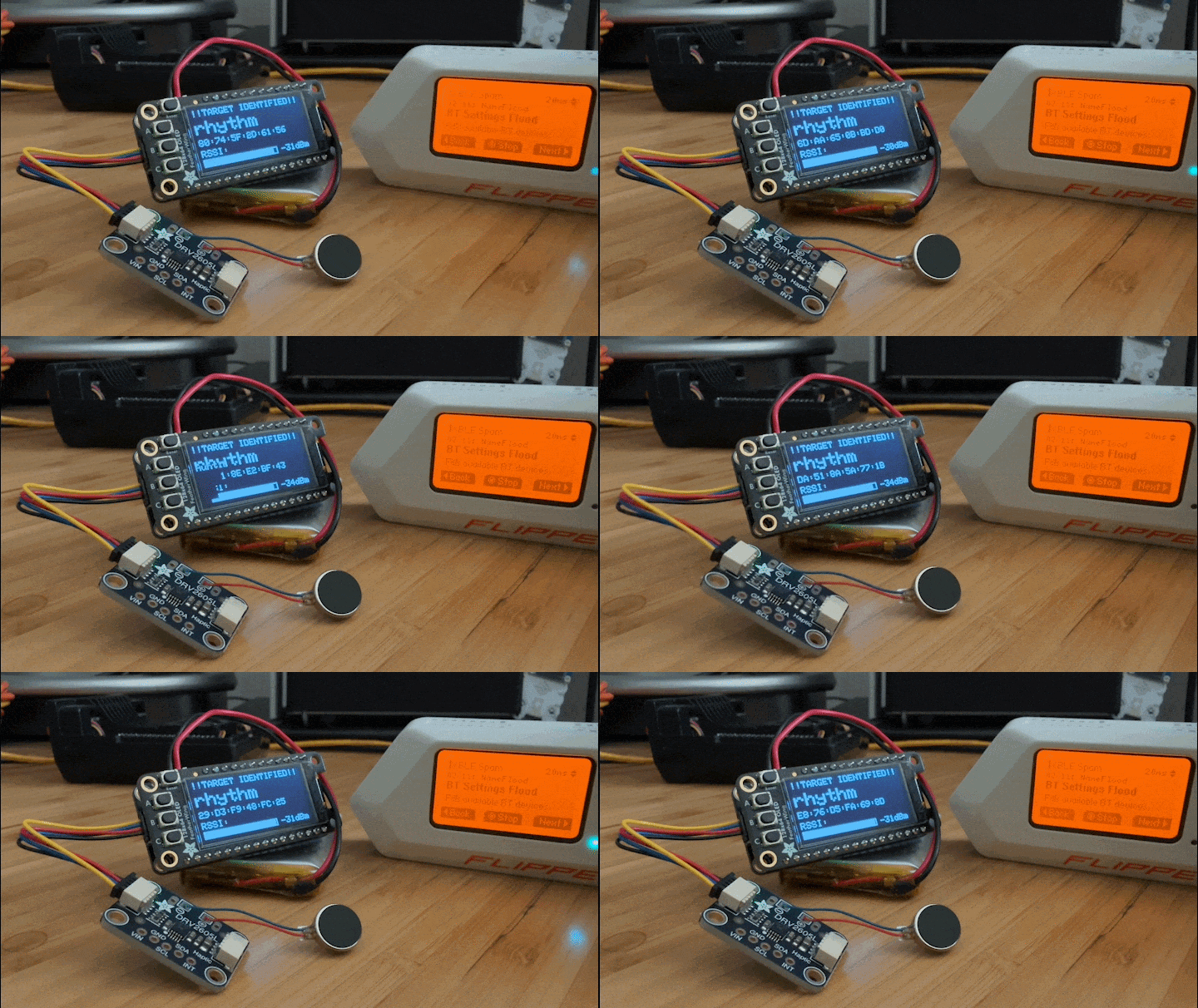
Metasshole 2026.08.23
This is an early iteration of my Metasshole project.
The device is an Adafruit ESP32 Feather V2 with a the FeatherWing OLED attached. The module below runs the buzzer to the right of it.
The goal is for when the device detects Meta AI glasses it sounds the alarm by triggering the buzzer. That buzzer is haptic only, so inaudible. I plan on making a vocal version.
And the name, “Metasshole” … I know everyone is simply calling them “Pervert Glasses,” but I’m building on the “Glasshole” lable we used the last time around with the Google Glass.
Current code:
https://github.com/easykraken/metasshole -
US Law Enforcement Warns of ‘Anti-Tech Extremism’ as AI Hatred Grows
Daniel Boguslaw · WIRED
Spencer Reynolds [senior counsel at the NAACP Legal Defense Fund] says that, despite the real if limited threat posed … a category like “anti-tech extremism” could be drawn so broad as to ensnare peaceful data center protesters, AI skeptics, and anyone with a bone to pick with technology that permeates modern life.
· · ·
“Suspicious activity reports are incredibly unreliable, often about vague or innocent behavior, issued under permissive standards. These reports, often received in large volumes, allow officers to inject their own biases and see what they want to see in the facts.”
· · ·
Among the vaguely defined activities flagged by the Northern Virginia intelligence center as suspicious are “expressed/implied threat,” “observation/surveillance,” “photography,” “testing/probing of security,” and “attempted intrusion.”
-
CBP Tapped Into the Online Advertising Ecosystem To Track Peoples’ Movements
Joseph Cox · 404 Media
An internal DHS document obtained by 404 Media shows for the first time CBP used location data sourced from the online advertising industry to track phone locations. ICE has bought access to similar tools.
· · ·
DHS Office of the Inspector General (OIG) later found both CBP and ICE did not limit themselves to non-operational use. The OIG found that CBP, ICE, and the Secret Service all illegally used the smartphone location data, and found a CBP official used the data to track coworkers with no investigative purpose. CBP and ICE went on to repeatedly purchase access to location data.
-
‘It beggars belief’: MoD sources warn Palantir’s role at heart of government is threat to UK’s security
Charlie Young & Carole Cadwalladr · The Nerve
“When you have that mosaic built from UK sovereign defence, health, roads, power networks, power stations, and our major industrial bases, you have a detailed understanding of virtually every aspect of the sovereign United Kingdom. For an adversary, or even a nation with whom we have a special relationship, that picture is worth more than all the fine art on Earth.”
-
Inside the plan to kill Ali Khamenei
FT · Mehul Srivastava · James Shotter · Neri Zilber · Steff Chávez
This is mostly an article about the assassination of Ayatollah Ali Khamenei, but I was drawn to the intelligence operation, namely the construction of “patterns of life” through hacked traffic cameras.
Nearly all the traffic cameras in Tehran had been hacked for years, their images encrypted and transmitted to servers in Tel Aviv and southern Israel, according to two people familiar with the matter.
One camera had an angle that proved particularly useful, said one of the people, allowing them to determine where the men liked to park their personal cars and providing a window into the workings of a mundane part of the closely guarded compound.
Complex algorithms added details to dossiers on members of these security guards that included their addresses, hours of duty, routes they took to work and, most importantly, who they were usually assigned to protect and transport — building what intelligence officers call a “pattern of life”.