For some time now, I’ve been looking for a solution to house a small Dark Forest. If that’s a new phrase for you, Yancey Strickler proposes, “Imagine a dark forest at night. It’s deathly quiet. Nothing moves. Nothing stirs. This could lead one to assume that the forest is devoid of life. But of course it’s not. The dark forest is full of life. It’s quiet, because night is when the predators come out. To survive, the animals stay quiet.”
This concept has been applied to spaces online over the last few years. I sit in several dark forests built in Discords, Signal groups and a couple much geekier spaces. None are ideal, exemplified in part by the eminent mass exodus from Discord.
So when I happened to catch Yancey Strickler and Josh Citarella announcing the debut of the Dark Forest Operating System I wondered what the strange feeling I immediately felt might have been. I realize now it was hope, something rarely glimpsed these days. heh
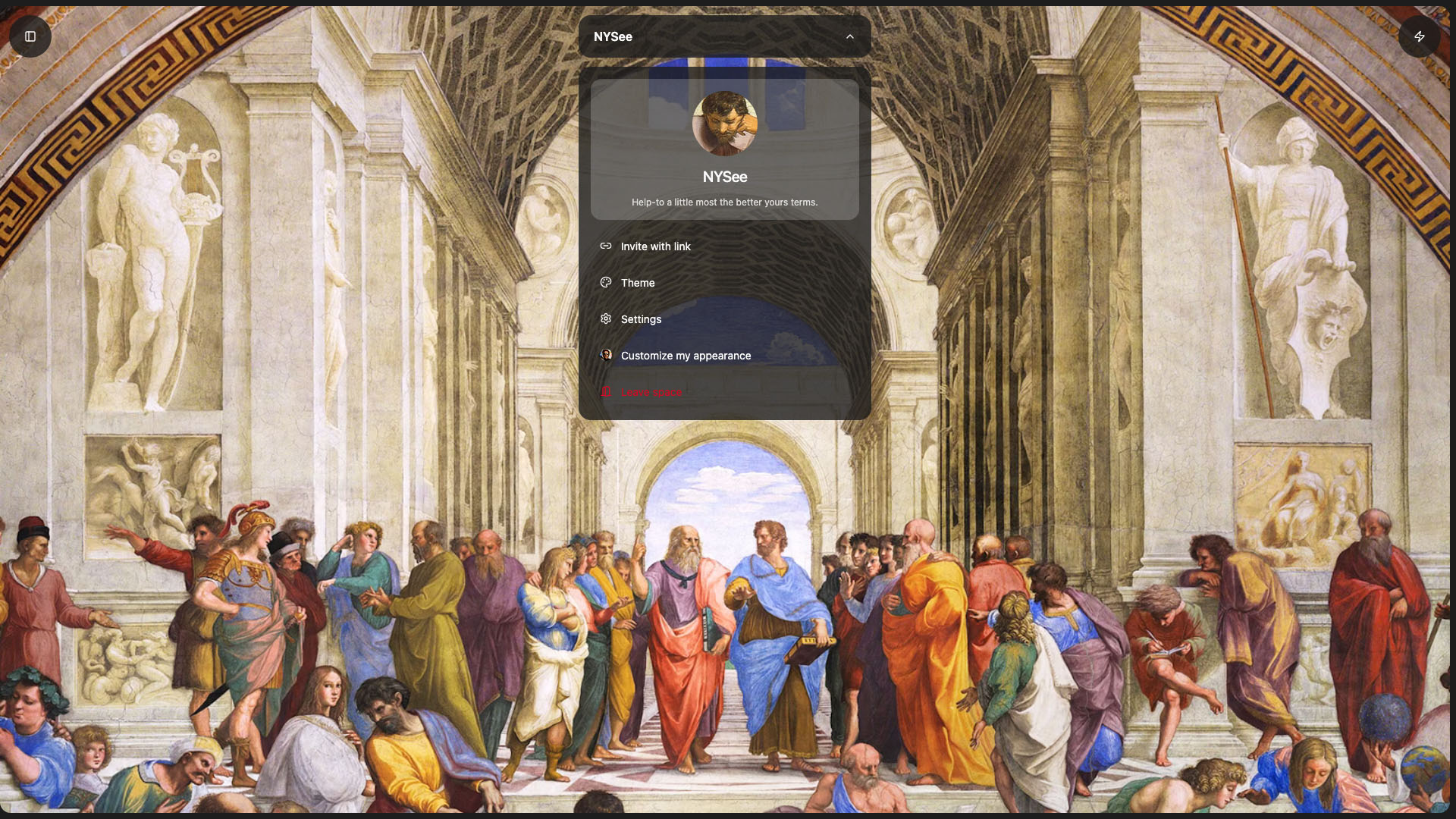
Seeing that the option’s now available, I’ve started building out a first space on DFOS.
WTF is that? .. you ask.
Yancey Strickler (the same) presents it well:
Welcome to DFOS
If you’re reading this, you’ve stepped into one of the first spaces on DFOS, while it’s still being built from the inside out. Which raises the question: what is this space?
The problem DFOS solves
Fear grips the web. The internet becomes more hostile. Bots, slop, and trolls overwhelm public space. The internet as we knew it gone forever. People are fleeing the public internet and joining dark forests to feel safe. This is the world that exists today. Not because anyone wants it, but because it’s the timeline we’ve been dealt. We’re doing this in the most haphazard way possible — expensively chaining together a bunch of apps for ourselves and our communities. We do it because there’s no native way to share ownership, run a group treasury, charge for access, and have a private space together. Until now. (*dun-dun-duuuuhhnnn*)
What you’re looking at
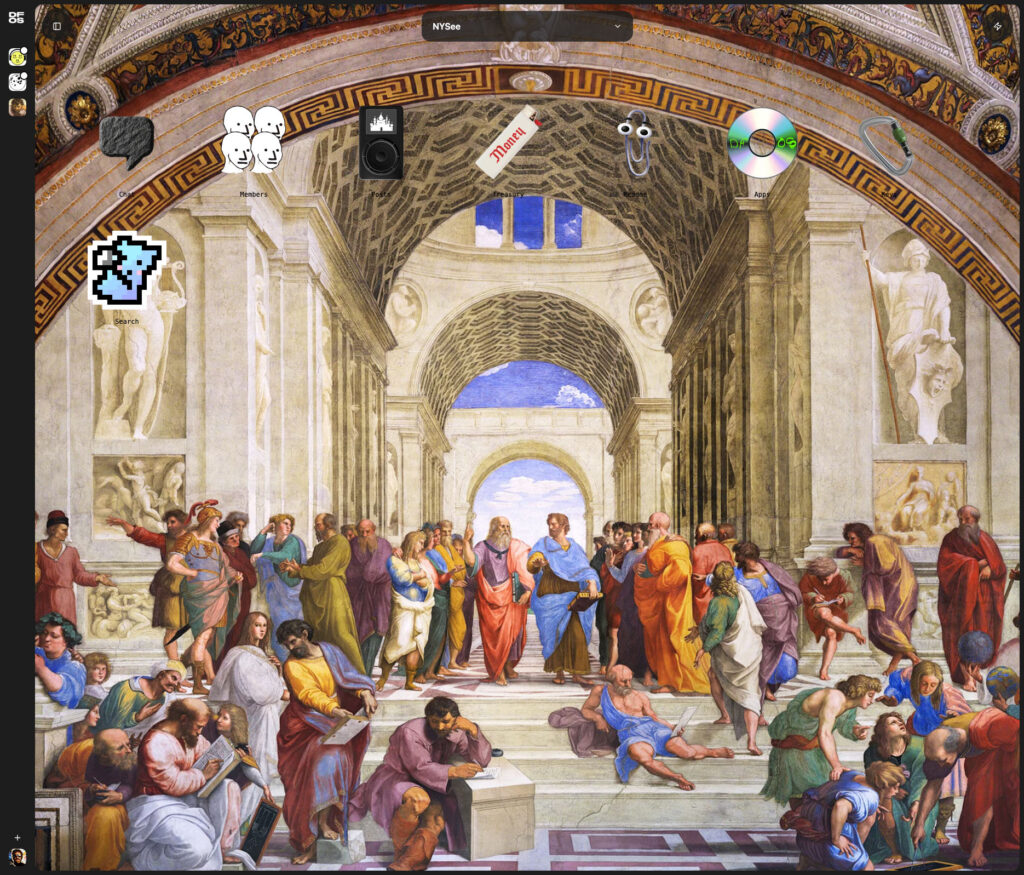
That’s what DFOS is for. DFOS creates shared private internets: members, money, chat, and a private feed in one shared space. Each space starts with six apps:
💬 Chat Auto-disappearing chats and private DMs.
👥 Members Everyone in this space. Closed, open, by application, or paywall — your call.
💰 Treasury Where member fees and sales revenue get split and reinvested into new projects and impact.
📝 Posts Private feed of images, videos, and text from anyone in the space. Upvoted posts can “leak” outside.
📄 Readme Where you explain what your space is about.
🛒 Apps (coming soon) Space to create, generate, publish, and download new apps and functions for your DFOS.
How to use this space
This is your own internet, without scale. A shared private space among a community of people. There’s no wrong way to use it, as long as you’re doing it together. We use DFOS to make DFOS. We use chat to coordinate. We use posts to share ideas. We use the Treasury to pay for specific jobs our community can do better than we can. We make new apps to fill the wants and needs we keep discovering. Your way of using this might be totally different. Our hope is that whatever your needs, the DFOS operating system can support them.
The bigger vision
We imagine a very different internet than the one we’ve recently known. A web where we always know who’s there. Where we no longer assume infinite scale. Where we don’t isolate ourselves. Where we have private spaces to be real with peers rather than performing for the algorithmic gods and their commercial desires.
Welcome to your private internet. 🌲
Yancey Stickler 10.12.2025