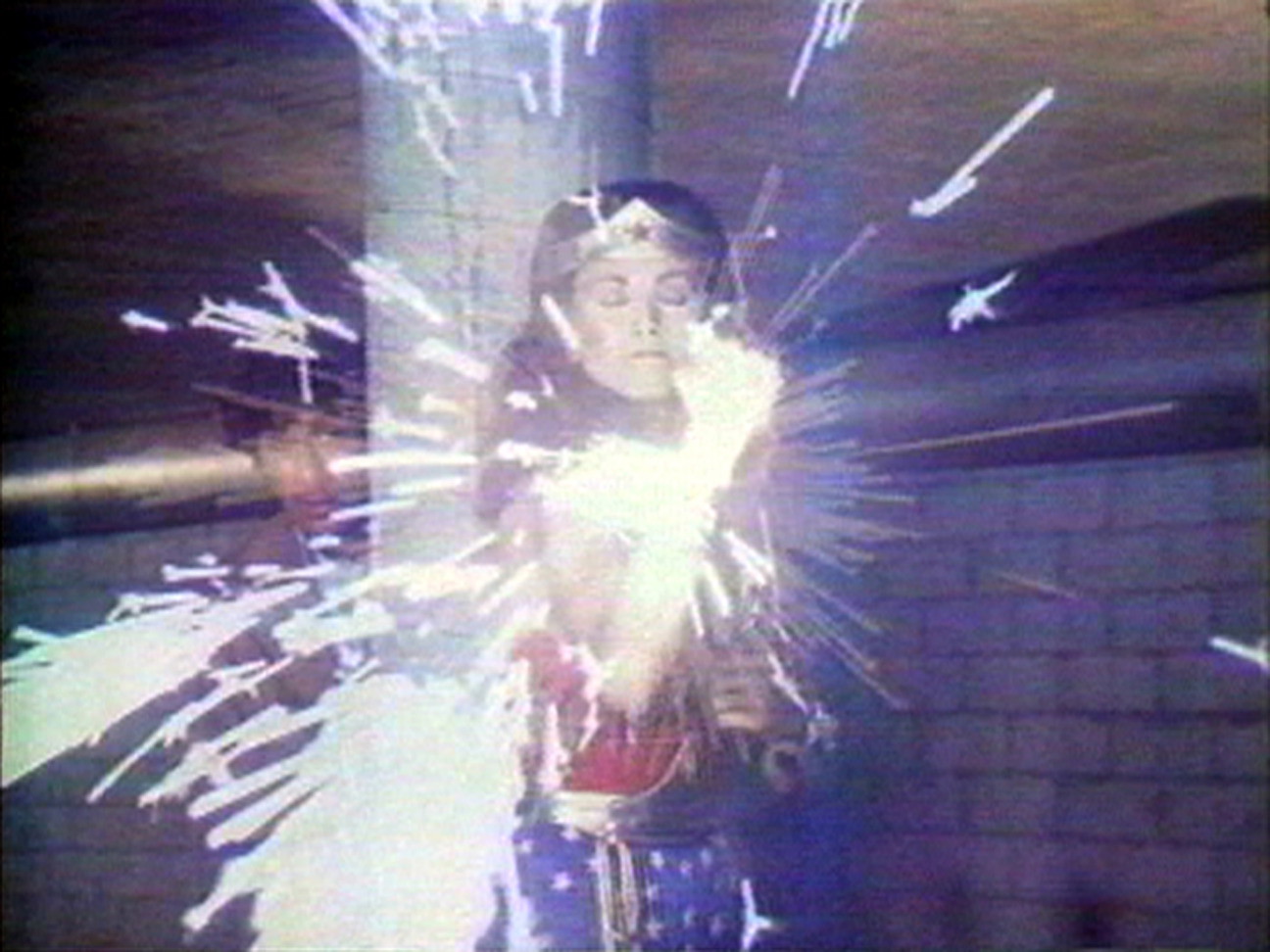
Join us at e-flux on Tuesday, February 10 at 7pm for the launch of e-flux Index #8, featuring Piper Marshall and a tribute to Dara Birnbaum. Marshall will read from her remembrance of Dara Birnbaum, published in e-flux Notes on the occasion of Birnbaum’s passing and re-published in e-flux Index #8. The reading will be followed by a screening of selected works from Birnbaum’s seminal oeuvre. Copies of e-flux Index #8 will be available for purchase at a discounted price at the event.
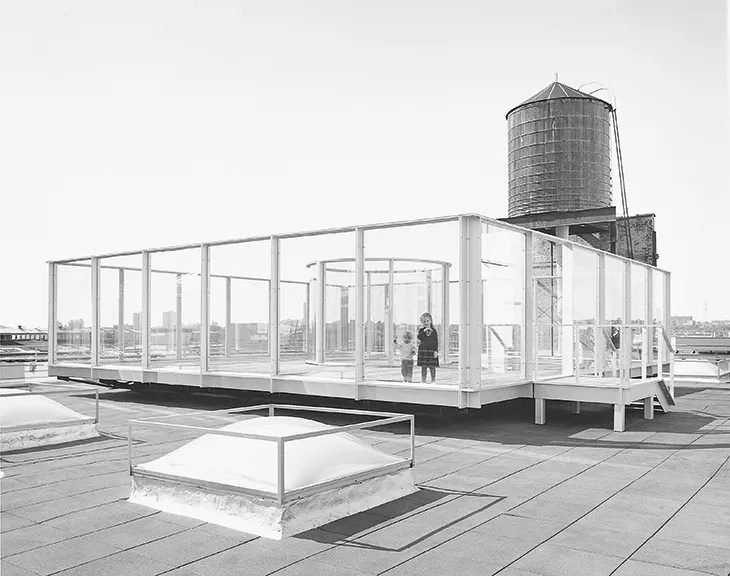
I’m pretty sure I first caught the piece at a party on to rooftop of Dia’s 548 West 22nd Street, Chelsea location. This must’ve been a summer evening around 2002 or 2003.
One thing making the experience unique was the party’s being held in and around Dan Graham’s, Rooftop Urban Park Project (1981–91). Again, while the memory is a bit hazy, and because there seems to be no documentation of the event online, through the haze I remember the tranquil feel of the event. While Wonder Woman transformed and transformed again, we were casually sitting inside Dan Graham’s piece with a six pack.
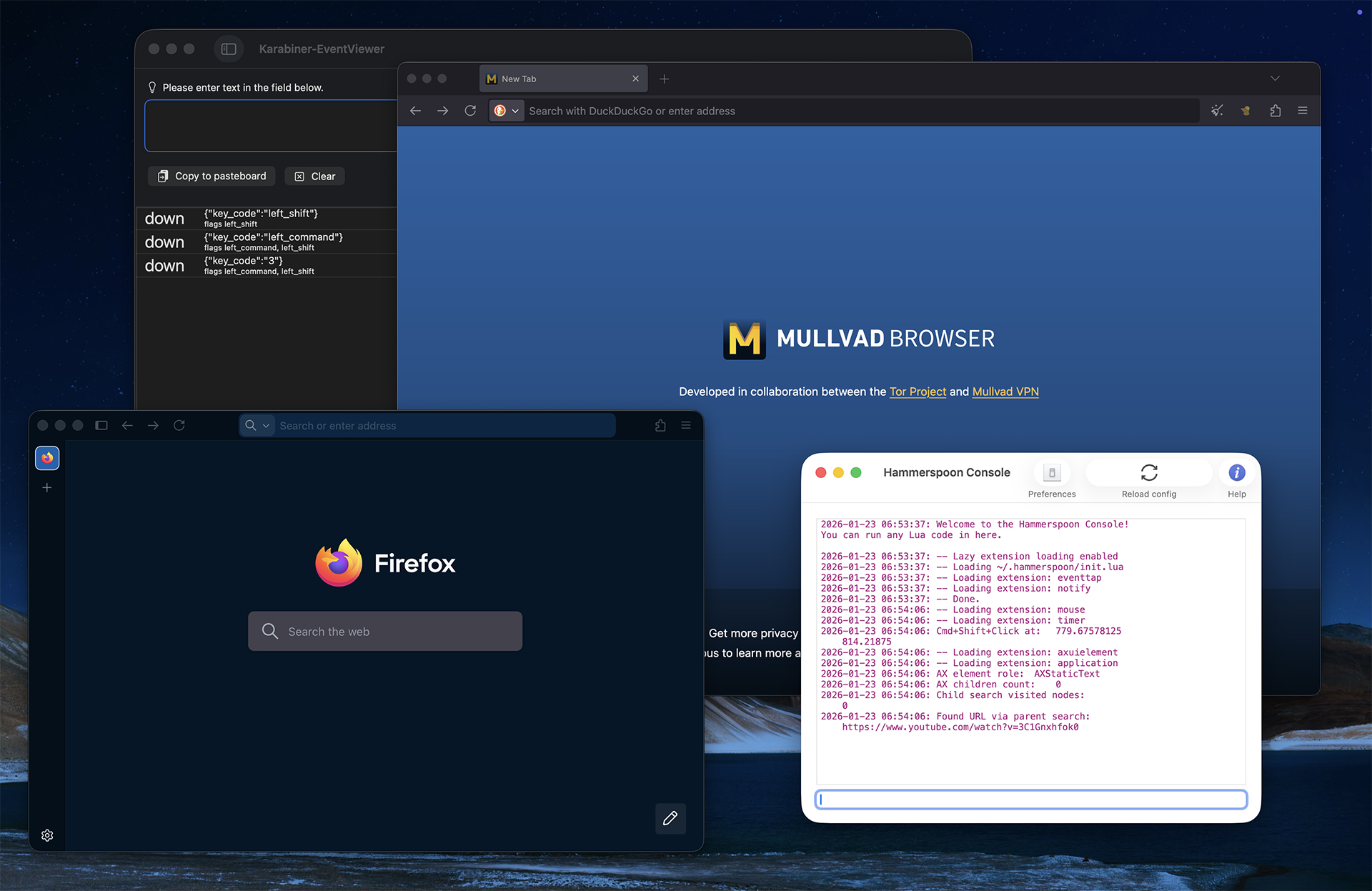
Mullvad Browser is one of 2 daily drivers. I spin up and down others, but I consistently bounce between Mullvad and Firefox where I’m always running multiple profiles. Wait. Wat?! Why would I make my life so annoying and tedious, you ask?
They’re all out to getcha. This is not a secret. Explore browser fingerprinting for maximum rage inducement.
I prefer to keep aspects of my online life segmented, a separation of concerns. Some things are similar enough that I don’t mind the related sites understanding who I am and what I’m doing there. Dev work and all of it’s associated activity sits in one profile. Newspapers, magazines, library websites and such live in another. Each profile’s cookies, browser histories, fingerprint, etc. remain unknown to the others. For more discretion (within reason) I’ll hit sites via Mullvad where I’m regularly creating new identities, escalating to Tor on occasion … sensitive topics like health.
Juggling all of these browsers def ain’t easy. What if I’m on a page in Firefox but want to open the link in Mullvad? Well, you say, you copy the link, paste it into Mullvad and don’t look back. But if it’s something you rinse and repeat all day it becomes hellish. There is a better way. Didn’t find any existing solution, so I just rolled my own.
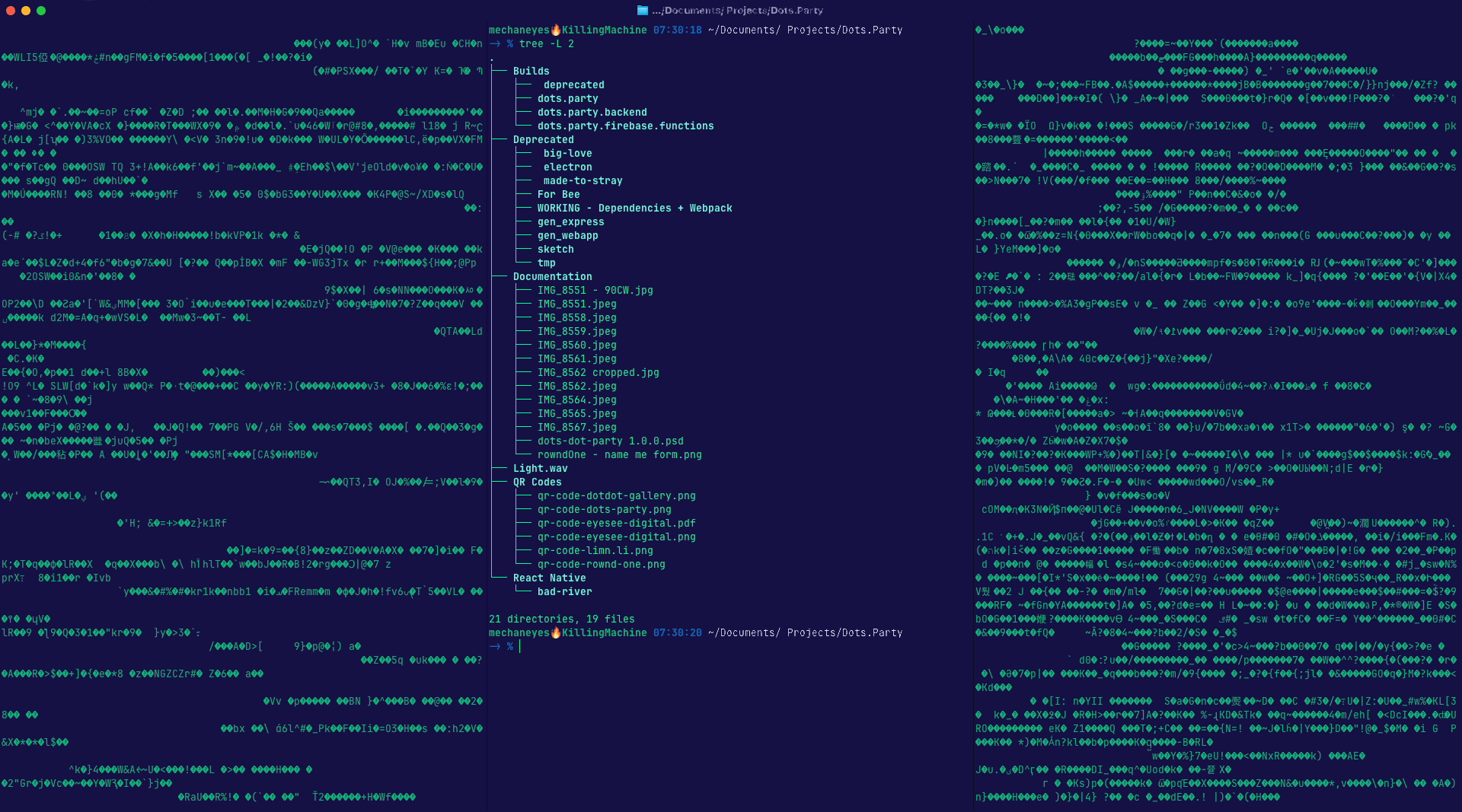
WTF is this noise?
OK. I’ve got the dueling browsers (minimum). And they don’t talk to each other. By installing Hammerspoon and writing a Lua script I’m able to do a Cmd+Shift+Click combo, and with that open the clicked Firefox link in Mullvad. Nice.
The video may be tough to follow, but at about 30s I clear the event viewer, you see that Cmd+Shift are pressed, then a click, then waves hands, link opens in Mullvad Browser.
A floaty banger, that one.
I’d rather not do this with an extension or use other simpler methods as doing so translates to a more unique fingerprint. So then comes the wrastlin: Grab the code. Use the code.
Here’s a high‑level overview of my script, ~/.hammerspoon/init.lua:
Sets up a Cmd+Shift+Click hook using hs.eventtap to intercept left mouse down events.
Targets Firefox only, checking the frontmost app bundle ID against common Firefox builds.
Uses macOS Accessibility (AX) to locate the UI element under the cursor and extract a link URL.
Normalizes AXURL values, handling both string and table formats (like absoluteString).
Searches multiple AX paths for links:
Direct AXURL / AXValue on the element
AXLinkUIElements / AXLinkedUIElements
Child tree traversal (bounded depth + node cap)
Parent chain traversal
Focused element fallback
Opens the URL in the system default browser if found.
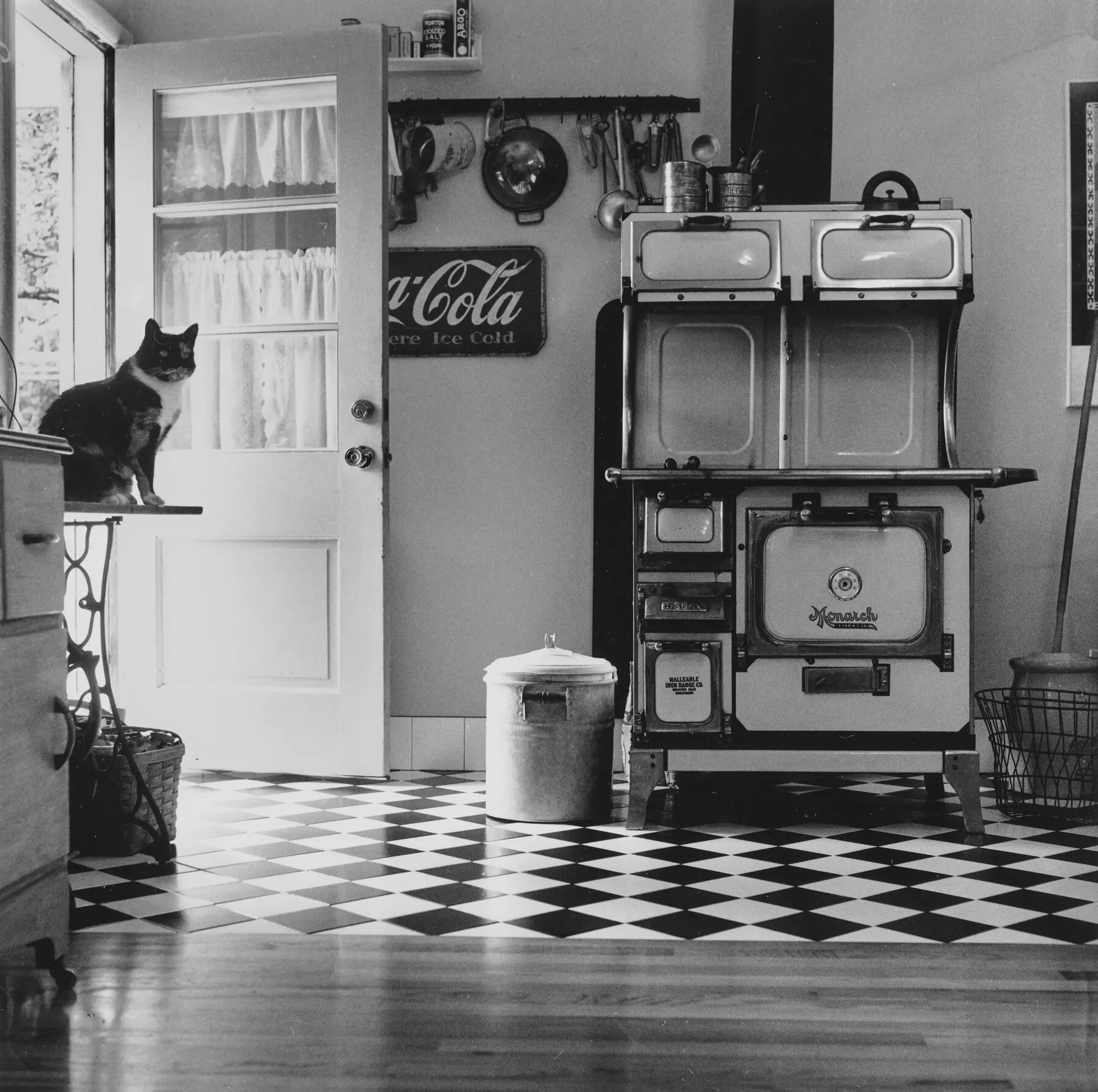
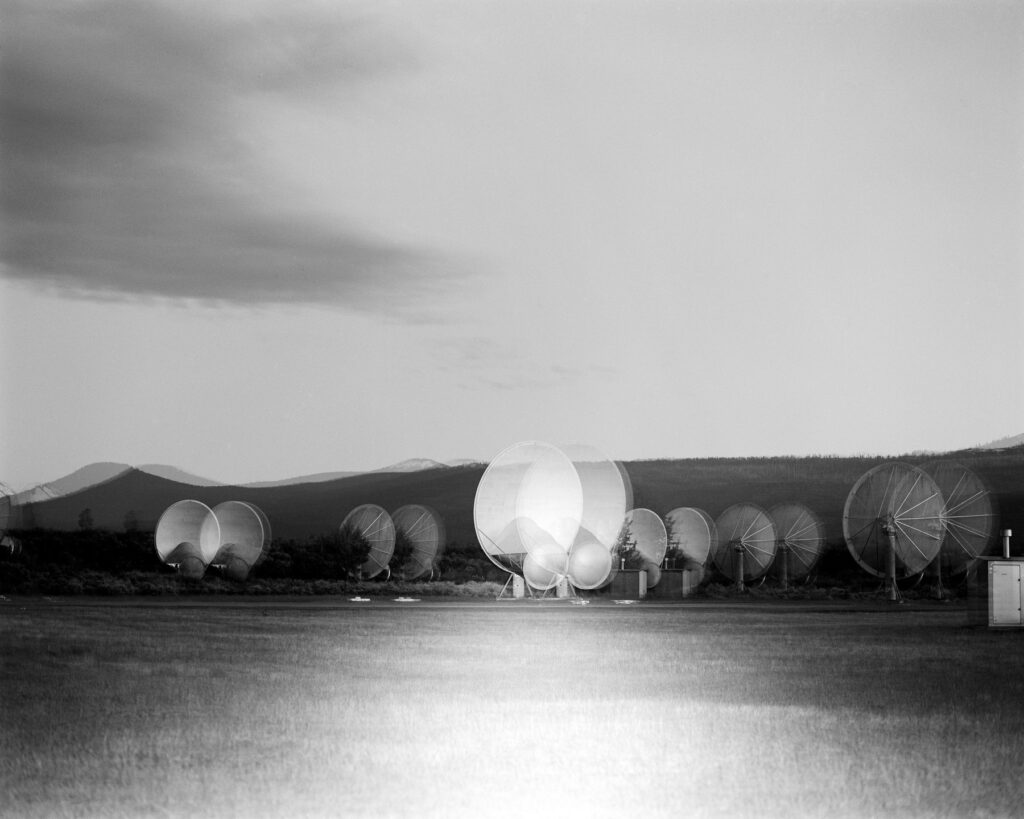
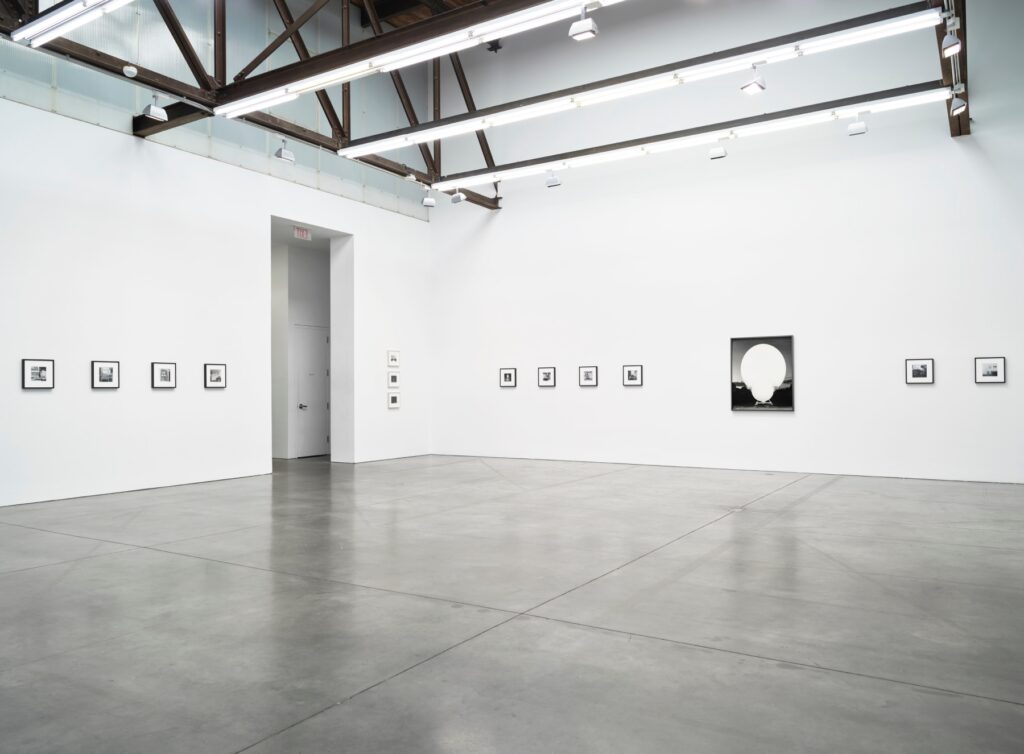
This presentation will mark Leonard’s first exhibition with Luhring Augustine and Nelson’s second show with the gallery, her work previously featured in Tiptoeing Through the Kitchen, Recent Photography (Spring 2024).
‘When people look at my pictures I want them to feel the way they do when they want to read a line of a poem twice’. ― Robert Frank
The first-ever solo exhibition of Frank’s work to be presented at the Museum of Modern Art in New York, Life Dances On: Robert Frank in Dialogue will bring together some 200 artworks produced by the artist over the course of six decades, up until his death in 2019. The show, named for a 1980 film by the artist, will focus on the experimental ethos of Frank’s work across photography, film, and books, highlighting the ways he engaged with his contemporaries and his communities as part of his practice.