Joshua Citarella and Yancey Strickler · Metalabel
Yancey and Josh dropping breadcrumbs to a new world.
Hint: It’s our own shared private internet.
Yancey and Josh dropping breadcrumbs to a new world.
Hint: It’s our own shared private internet.
[DHS] has issued subpoenas to technology companies to unmask or locate people who have documented ICE’s activities in their community, criticized the government, or attended protests.
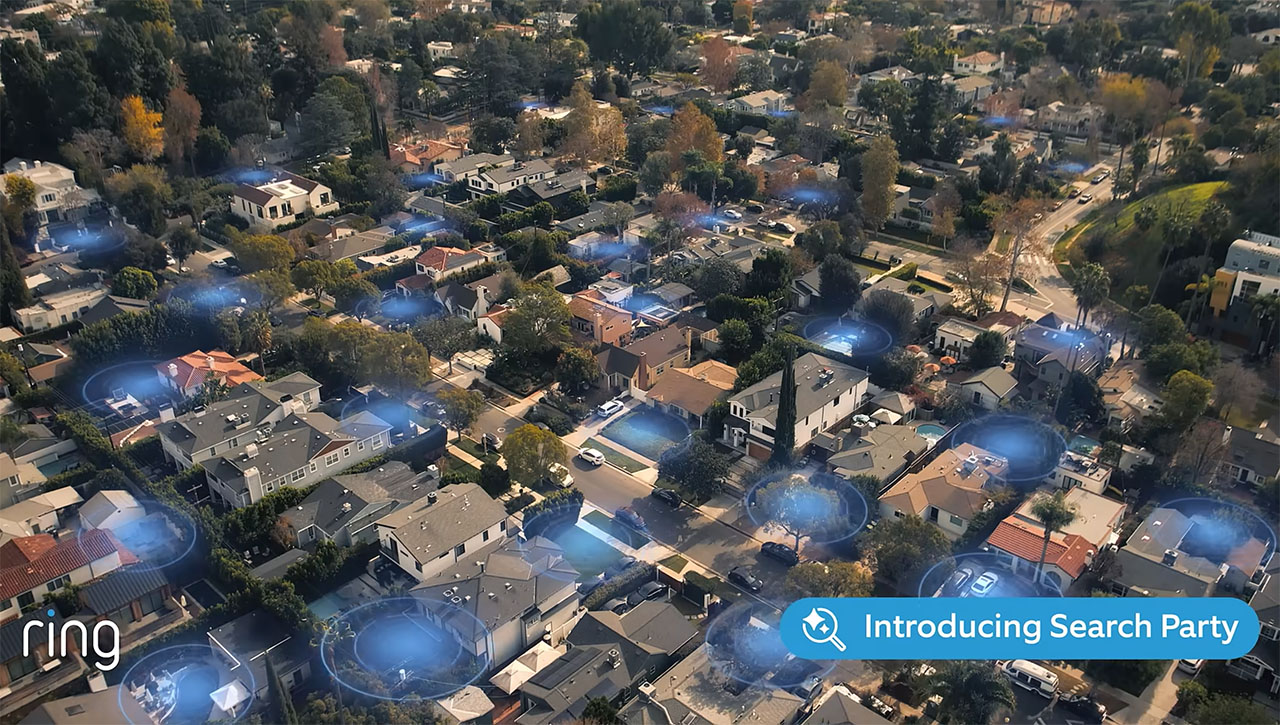
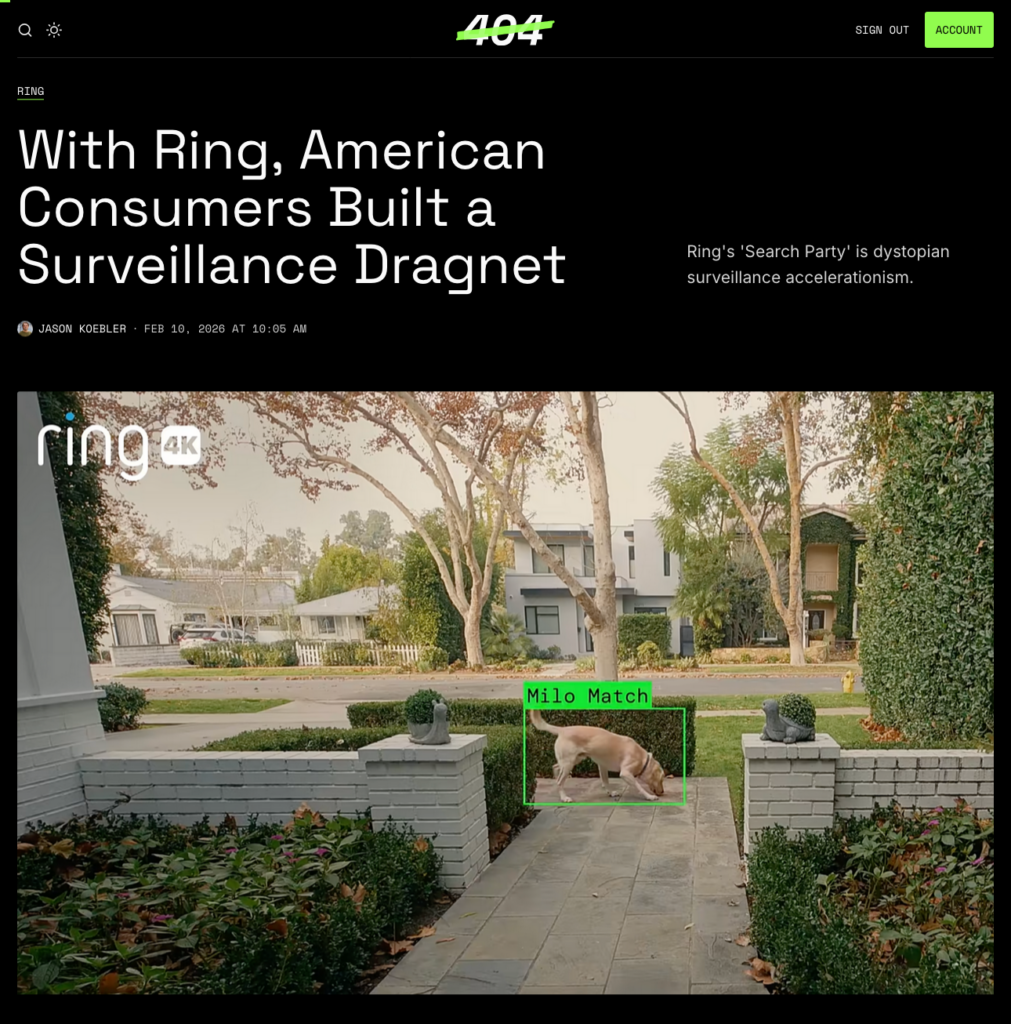
Ring had always, explicitly been intended to assist law enforcement. In a series of investigations we did back at VICE (mostly written by Caroline Haskins, who is still covering surveillance at WIRED), we uncovered thousands of pages of documents, emails, and chats via public records requests and leaks that highlighted Ring’s surveillance ambitions. The company threw parties for police, employees wore “FUCK CRIME” shirts to internal parties, and helped police facilitate the retrieval of footage from its customers’ cameras if they initially refused to cooperate.
. . .
With Ring’s recent partnership with Flock, which will further facilitate the sharing of video footage with police, and its new Search Party feature, the message is clear: Ring is still, again, and always will be in the business of leveraging its network of luxury surveillance consumers as a law enforcement tool.

Police departments nationwide also routinely tapped into the eight Flock cameras installed at the 30,000-student Alvin independent school district south of Houston. Over a one-month period from December 2025 through early January, more than 3,100 police agencies conducted more than 733,000 searches on the district’s cameras, the 74’s analysis of public records revealed. Of those, immigration-related reasons were cited 620 times by 30 law enforcement agencies including ones in Florida, Georgia, Indiana and Tennessee.
. . .
Federal agents “were working directly” with a Carrollton police officer who had access to the Flock cameras “and they asked him to run it and they did”, Hitchcock said. If federal agents ask his office to help them with an immigration case, Hitchcock said, “we will assist them – no questions asked.”
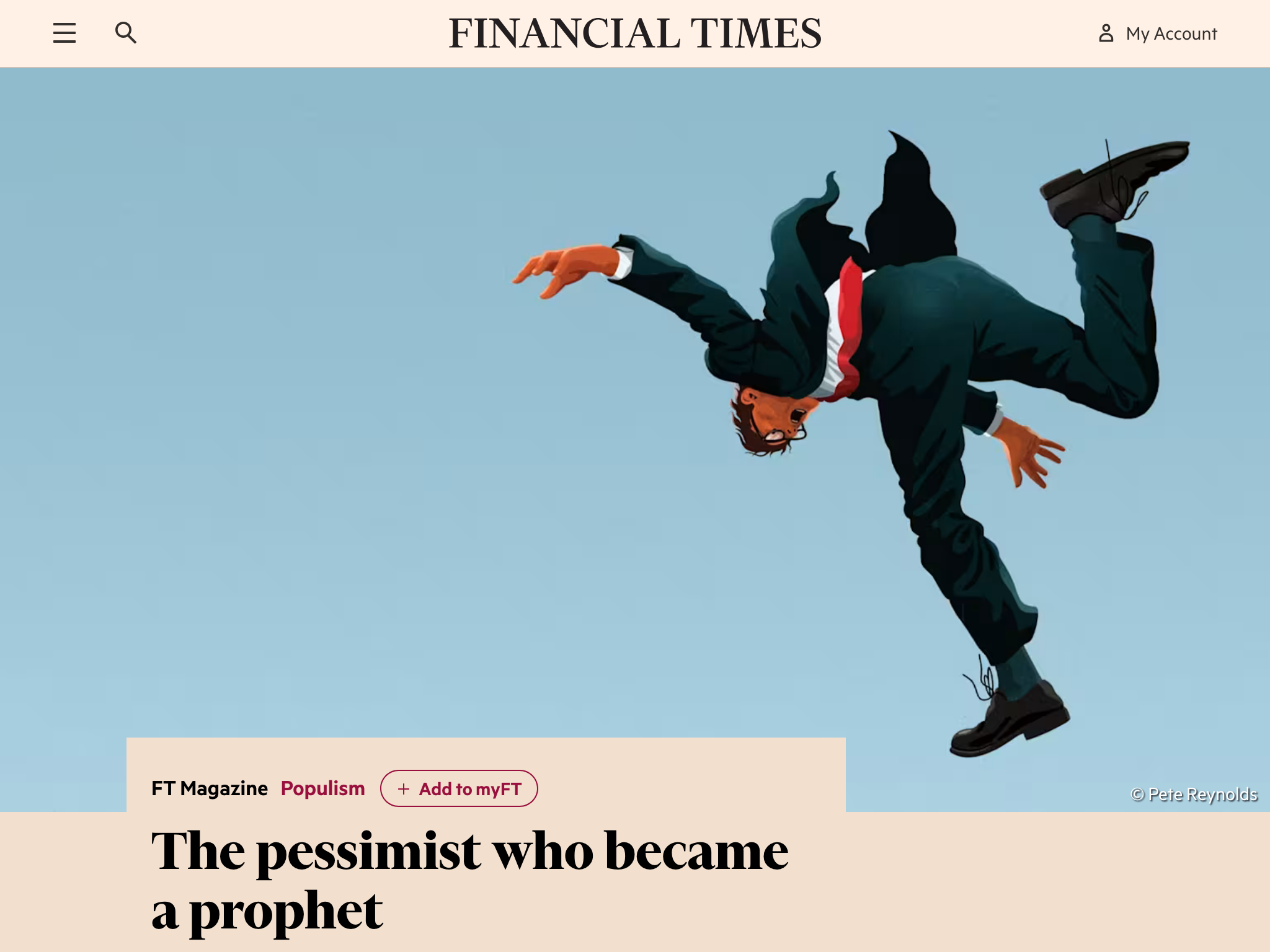
Michael Sandel was ignored by a generation of political optimists. Now he is searching for a way out of the mess he saw coming
“One way of seeing how a toleration of avoidance leads to conflict is that when we give up on engaging with moral disagreements . . . we create a moral void at the heart of public discourse.” That, in his view, has been the cost of the politics we have seen since the 1990s. “Democratic citizens can’t abide for long a public discourse empty of larger moral meaning.” Sooner or later that void would have to be filled by “narrow, intolerant, dangerous moralisms of two kinds: religious fundamentalism or hypernationalism. And that’s exactly what we’ve seen.”
FT Gift Link

Sunday, February 1, 2026
2:30 PM 5:30 PM
Wonderville
1186 Broadway
Brooklyn, NY, 11221
The project involved selling the ministry an Artificial Intelligence Platform that uses reams of classified intelligence reports to make life-or-death determinations about which targets to attack. In an understatement several years ago, Karp admitted, “Our product is used on occasion to kill people,” the morality of which even he himself occasionally questions. “I have asked myself, ‘If I were younger at college, would I be protesting me?’”